Essentials of Health Policy and Law: An Interim Update on Key Issues

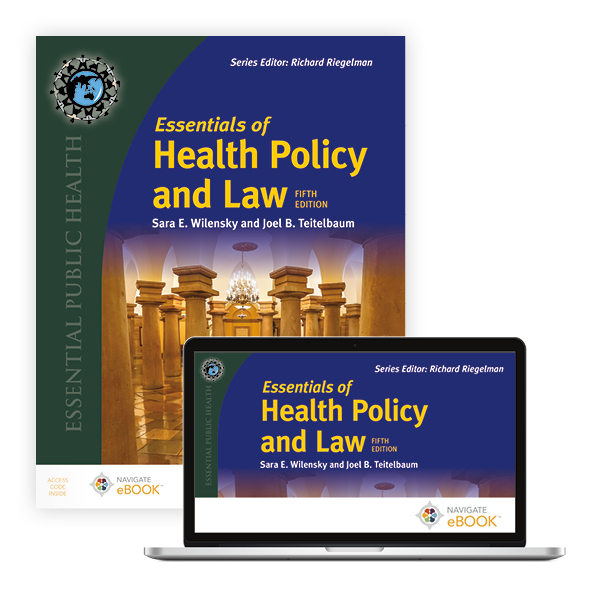
Publisher’s Note: A new edition of Essentials of Health Policy and Law is in development and expected to be available in summer 2026, in time fall 2026 course use. In this article, the authors provide an interim update to address some of the major health policy and law changes that have occurred since publication of the 5th edition. This high-level overview will assist faculty teaching with this text during the 2025-2026 academic year. The 6th edition will explore these changes in greater detail.
Republicans swept into power in the 2024 federal elections, once again gaining control of the White House and Congress. Republicans now hold 53 seats in the Senate, compared to 47 (including two independents) for the Democrats. As we write this in August 2025, Republicans have a smaller majority in the House, with a current 219-212 edge. Four special elections are to be held for the 119th Congress to fill vacancies created by three deaths (all Democrats) and one resignation (Republican).
Many observers questioned whether Republicans would be able to pass legislation given their thin majorities and range of viewpoints, especially when Republicans struggled to do so in the past. Having your party in power in the White House makes a difference, however, and both conservative and moderate Republicans compromised instead of standing in the way of passing President Trump’s signature piece of legislation for the start of his second term.
This law, the One Big Beautiful Bill Act or OBBBA, included the most significant changes to Medicaid in decades. Taken together, changes to Medicaid, Medicare and the Affordable Care Act (ACA) are estimated to result in 16 million people losing health insurance through 2034 (Swagel, 2025a). A significant concern also exists about OBBBA’s effect on rural providers who rely heavily on Medicaid reimbursement. While OBBBA includes a $50 billion rural transformation fund, it covers only a fraction of the $155 billion spending reduction expected in rural areas (Saunders et al., 2025).
Overview of Medicaid Changes
Medicaid changes are projected to reduce federal spending by more than $1 trillion over 10 years and result in almost 12 million people losing coverage. Most of the savings stem from new work requirements, eligibility restrictions, and financing changes.
The Medicaid changes affect Medicare beneficiaries as well, because dual eligible recipients (low-income seniors eligible for both Medicaid and Medicare) may lose their Medicaid coverage and Medicare low-income subsidy for prescription drugs. Given Medicaid’s proven benefit to state economies, the new law is also estimated to cost over 300,000 jobs in related industries such as healthcare, food production and construction (Horstman et al., 2025; Ku et al., 2025).
OBBBA includes the following provisions restricting Medicaid eligibility:
- Forces states to adopt work requirements for ACA Medicaid expansion or waiver adults age 19-64
- Requires states to redetermine eligibility every 6 months
- Requires states to follow new verification and information sharing rules
- Prohibits enforcement of new eligibility and enrollment rules that were intended to ease the enrollment process in Medicaid and the Medicare Savings Program (MSP) for dual eligibles
- Removes several immigrant categories from qualified immigrant status
- Limits retroactive coverage to 1 month for expansion populations and 2 months for traditional enrollees.
In addition to the eligibility changes, OBBBA reduces federal spending through the following mechanisms:
- Prohibits the creation of new provider taxes or the expansion of current provider taxes, and limits states’ ability to offset provider costs
- Allows the oft-delayed Disproportionate Share Hospital cuts to begin in 2025
- Limits the ability of states to use state-directed payments to increase provider reimbursement
- Changes the budget neutrality calculation for Section 1115 waivers
- Expands the definition of improper payments and reduces the match paid for such payments
- Uses the traditional FMAP instead of the expansion FMPA for emergency Medicaid services provided to immigrants who would otherwise be eligible under expansion Medicaid
- Increases cost-sharing for Medicaid expansion adults (although premiums and enrollment fees are prohibited).
Overview of Medicare Changes
While OBBBA’s Medicare provisions are much more limited, they have the potential to be quite disruptive. As mentioned above, prohibiting the enforcement of the eligibility and enrollment rules will affect enrollment in the MSP, a program that provides enhanced assistance for dual eligibles. These rules did not expand eligibility or benefits, but instead streamlined the enrollment process for the program.
The Congressional Budget Office (CBO) estimates that without the new rules, 1.4 million fewer low-income beneficiaries will enroll in MSP (Carter, 2025). The more significant change involves a provision known as sequestration (generally, this refers to automatic, across-the-board cuts in federal spending) under the Pay-As-You-Go Act of 2010 (PAYGO). PAYGO requires bills that increase spending or cut taxes to be offset by future spending decreases or tax increases. OBBBA is estimated to increase the deficit by more than $3 trillion, meaning PAYGO applies.
The CBO estimates that sequestration would result in a $45 billion Medicare reduction in 2026 and an almost $500 billion reduction from 2027-2034 (Swagel, 2025b). This provision received little attention during the debate over the bill and no public discussions have examined how these reductions would be achieved.
While not related to OBBBA, another recent Medicare trend is worth mentioning. In 2024, enrollment in Medicare Advantage (MA), Medicare’s managed care program, surpassed 50% of all eligible beneficiaries for the first time (Freed et al., 2024). Enrollment is not spread evenly throughout the country — more than half of all MA beneficiaries live in 30 states and 5 states have less than 30% of their Medicare enrollees in managed care (Freed et al., 2024).
Medicare beneficiaries are attracted to managed care because of the extra benefits (vision coverage, gym memberships, etc.), limited cost-sharing, and out-of-pocket limits. In addition, some Medicare beneficiaries find it difficult to switch from managed care to traditional fee-for-service (FFS) Medicare because they may not be eligible for affordable Medigap plans to assist with cost-sharing.
In most states, Medigap plans only have to offer policies without medical underwriting (i.e., taking into consideration pre-existing conditions when pricing a plan) during limited periods. As a result, beneficiaries with health conditions may be priced out of Medigap plans, making it too expensive to switch to traditional Medicare. MA plans can offer extra benefits and lower cost-sharing in part because the MA reimbursement formula and other adjustments provide MA plans with higher reimbursement than traditional Medicare. In fact, in 2025 MA plans will cost Medicare $99 billion more than what their enrollees would have cost if they had been treated by Medicare FFS providers (Lieberman & Mayes, 2025).
The MA market has also become highly concentrated, with United HealthCare and Humana accounting for 59% of all enrollments (Zhu et al., 2025). The combination of paying more for services and having an increasingly concentrated market raises concerns about the future cost and competitiveness of the MA program. In addition, a shrinking traditional FFS market has implications for access to care in low MA-penetration states, as well as for funding of graduate medical education and of critical access hospitals that are supported by traditional Medicare payments.
Overview of ACA Changes
OBBBA’s provisions are also expected to increase the rate of uninsured U.S. residents because of new ACA pre-enrollment verification rules, immigrant eligibility restrictions, and expiration of the enhanced premium tax credits in the ACA marketplaces. The pre-enrollment verification rules will require various aspects of eligibility (income, place of residence, etc.) to be verified before consumers can receive their premium tax credits or subsidies. While consumers may enroll in plans while awaiting verification, unsubsidized plans are expensive. In addition, the Trump administration reinstated policies from its first administration the restricted enrollment, such as reduced navigator funding and shorter enrollment periods.
In 2024, 92% of enrollees received a premium tax credit to assist with purchasing a plan in the marketplace (Peter G. Peterson Foundation, 2024). The 2021 American Rescue Plan Act enhanced the tax credit by expanding eligibility, capping out-of-pocket premiums, and increasing the amount of the tax credit. The enhanced tax credit resulted in an average individual annual savings of over $700, and enrollment in the marketplaces doubled from 11.4 million in 2020 to 24.3 million in 2025 (McGough et al., 2025).
These rules expire in 2025 and were not extended in OBBBA. With their expiration, CBO estimates that enrollment in the marketplaces will fall from 23 million in 2025 to 14 million in 2034, and that over 4 million people will become uninsured (Hale et al., 2024). In addition, most enrollees will pay higher premiums, with low-income, elderly, and those in non-Medicaid expansion states facing the biggest increases (Ortaliza et al., 2025).
Overview of Case Law
Since publication of the 5th edition of Essentials of Health Policy and Law, several important lawsuits have been decided by the U.S. Supreme Court. We’ve summarized each decision below and will provide more detail in the 6th edition.
- Not long after the 5th edition manuscript was submitted in 2022, the court handed down its seismic decision in Dobbs v. Jackson Women’s Health Organization, which ended the federal constitutional right to obtain an abortion. (We wrote a blog article about this decision in 2022 but include information here for more recent textbook adopters).
Dobbs concerned a 2018 Mississippi law that banned virtually all abortions after the 15th week of pregnancy, a standard that lower federal courts ruled was in violation of Roe v. Wade and Planned Parenthood v. Casey. But in a 5-4 decision, the court majority overturned both Roe and Casey as “grievously incorrect,” while at the same time claiming that nothing in Dobbs should be read as threatening other fundamental implied liberty rights, such as the rights to contraception (as pronounced in Griswold v. Connecticut) and same-sex marriage (as pronounced in Obergefell v. Hodges).
According to the majority, the fact that abortion concerns the potentiality for human life adequately separates Dobbs from other precedents concerning implied constitutional rights. In a concurring opinion, however, Justice Clarence Thomas urged his colleagues to similarly reconsider a series of other implied constitutional rights.
Three justices – Stephen Breyer, Sonia Sotomayor, and Elena Kagan – dissented, referring to the majority opinion as a violation of women’s autonomy, a threat to other implied constitutional rights, and a threat to the legitimacy of the Supreme Court itself. As discussed in more detail in the forthcoming edition’s chapter on individual rights, the implications of the Dobbs decision were immediate and profound.
2. In another monumental decision, this one in 2024, the court overturned yet another of its prior decisions. By a 6-2 margin that broke along ideological lines (Justice Ketanji Brown Jackson recused herself because she participated in the case as a lower court judge), the court ruled in Loper Bright Enterprises v. Raimondo that federal agency interpretations of ambiguous statutes should no longer be provided deference.
Instead, federal courts will decide for themselves – even in cases of deeply technical or narrow policy matters – what Congress intended in drafting the statute. While this may seem like a rather minor matter to some readers, it is, in fact, a major upheaval, as agencies carried out this critical interpretive task for decades without much interference from federal courts thanks to the court’s 1984 decision in Chevron v. Natural Resources Defense Council. Chevron said that courts must be broadly deferential to federal agencies when agencies interpret statutes for the purpose of crafting implementing regulations. This came to be known as “Chevron deference” and became one of the most important principles in administrative law, an area deeply important to health policy-setting.
In using Raimondo to overturn the Chevron decision, the court left to the discretion of increasingly partisan federal judges a staggering range of health, environmental, and labor policies (e.g., patient and workplace protections, drug safety, vaccine effectiveness, nursing home care, clean water and air standards, infectious disease controls, and much more).
3. In the case of Kennedy v. Braidwood Management in 2025, the court ruled 6-3 that the ACA’s preventive services requirement is constitutional. The case was initiated by religiously conservative individuals and businesses who believed that covering insurance benefits like pre-exposure prophylaxis and contraceptives violated their religious beliefs. They argued that the members of the United States Preventive Services Task Force — which under the ACA determines which preventive services must be covered — were improperly appointed by the HHS Secretary.
While the court upheld the task force appointments, it also found that the HHS Secretary has the power to remove panel members at will and to review the recommendations they issue, meaning the HHS Secretary could easily alter task force membership, ask a reconstituted task force to reconsider prior recommendations, and/or potentially delay review of new services or updates to existing ones if existing task force members were removed but not replaced in a timely fashion.
It is worth noting that these powers are significant. Approximately 100 million privately insured people receive preventive services each year without cost-sharing under the ACA’s preventive services requirement.
4. Lastly, we bring your attention to ongoing litigation about the ACA’s anti-discrimination provision, known simply as Section 1557. This law prohibits discrimination based on race, color, national origin, sex, age, or disability by health programs or activities that receive federal funding. The most recent Section 1557 lawsuit focuses on regulations issued in 2024 that provide health care protections for transgender people. While the court had not ruled directly in this litigation as of August 2025, its earlier 2025 ruling in United States v. Skrmetti (a non-ACA case) may forecast an outcome.
In another 6-3 decision, the court in Skrmetti upheld a Tennessee law banning certain gender-affirming medical care for transgender minors, ruling that the law classifies people based on age and medical diagnosis, rather than on the basis of sex. Consequently, the state law does not trigger the heightened constitutional scrutiny that accompanies laws that classify on the basis of sex. As a result, similar bans of gender affirming care for minors enacted by more than two dozen additional states remain valid as well.
A Closely Divided Electorate Is Likely to Continue
Clearly, health policy and law have been active arenas since the 5th edition was published. Many of these events have and will result in seismic changes in our healthcare system — for consumers and providers alike.
While political winds are always shifting, it is difficult to envision major reversals of these trends while President Trump remains in office and the Supreme Court maintains its current composition. The 2026 mid-term elections will provide some insight into whether a majority of the country approves of the current direction or seeks change. Given recent history, we are likely to find ourselves with a closely divided electorate that offers little clarity for the future.
References
Carter, J. (2025, May 22). Broken promises: Republican’s budget reconciliation bill would cut Medicare. Medicare Rights Center. https://www.medicarerights.org/medicare-watch/2025/05/22/broken-promises-republicans-budget-reconciliation-bill-would-cut-medicare
Freed, M., Ochieng, N., Cubanski, J., & Neuman, T. (2024c, October 18). Key facts about Medigap enrollment and premiums for Medicare beneficiaries. KFF. https://www.kff.org/medicare/issue-brief/key-facts-about-medigap-enrollment-and-premiums-for-medicare-beneficiaries/
Hale, J., Hong, N., Hopkins, B., Lyons, S., Molloy, E., & The Congressional Budget Office Coverage Team. (2024). Health insurance coverage projections for the US population and sources of coverage, by age, 2024–34. Health Affairs, 43(7), 922–932. https://doi.org/10.1377/hlthaff.2024.00460
Horstman, C., Federman, S., Richards, C., & Coleman, A. (2025, May 5). How does Medicaid benefit states? The Commonwealth Fund. https://www.commonwealthfund.org/publications/explainer/2025/may/how-does-medicaid-benefit-states
Ku, L., Gorak, T., Namhee Kwan, K., Krips, M., Nketiah, L., Cordes, J. J. (2025, May 1). How national Medicaid work requirements would lead to large-scale job losses, harm state economies, and strain budgets. The Commonwealth Fund. https://doi.org/10.26099/6tcv-fh75
Lieberman, S. M., & Mayes, R. (2025). Inside the meteoric rise of Medicare Advantage. Health Affairs, 44(8), 906–914. https://doi.org/10.1377/hlthaff.2024.01546
McGough, M., Ortaliza, J., Cotter, L., & Cox, C. (2025, June 3). Early indication of the impact of the enhanced premium tax credit expiration on 2026 Marketplace premiums. Peterson-KFF Health System Tracker. https://www.healthsystemtracker.org/brief/early-indications-of-the-impact-of-the-enhanced-premium-tax-credit-expiration-on-2026-marketplace-premiums/
Ortaliza, J., McGough, M., Cox, C., Pestaina, K., Rudowitz, R., & Burns, A. (2025, June 18). How will the One Big Beautiful Bill Act affect the ACA, Medicaid, and the uninsured rate? KFF. https://www.kff.org/policy-watch/how-will-the-2025-budget-reconciliation-affect-the-aca-medicaid-and-the-uninsured-rate/
Peter G. Peterson Foundation. (2024, Dec. 6). How does the federal government subsidize healthcare under the ACA – and what does it cost? Peter G. Peterson Foundation. https://www.pgpf.org/article/how-does-the-federal-government-subsidize-healthcare-under-the-aca-and-what-does-it-cost/
Swagel, P.L. (2025a, June 4). Re: Estimated effects on the number of uninsured people in 2034 resulting from policies incorporated within CBO’s baseline projections and H.R.1, the One Big Beautiful Bill Act. Congressional Budget Office. https://www.cbo.gov/system/files/2025-06/Wyden-Pallone-Neal_Letter_6-4-25.pdf
Swagel, P. L. (2025b, May 20). Re: Potential statutory pay-as-you-go effects of a bill to provide reconciliation pursuant to H. Con. Res. 14, the One Big Beautiful Bill Act. Congressional Budget Office. Congressional Budget Office. https://www.cbo.gov/system/files/2025-05/61423-PAYGO.pdf
Zhu, N., Biniek, J., Sroczynski, N. & Neuman, T. (2025, July 14). Most Medicare Advantage markets are dominated by one or two insurers. KFF. https://www.kff.org/medicare/issue-brief/most-medicare-advantage-markets-are-dominated-by-one-or-two-insurers/
About the Authors
Sara Wilensky, JD, PhD, is the Associate Dean for Undergraduate Education and an Associate Teaching Professor in the Department of Health Policy and Management at the Milken Institute School of Public Health at The George Washington University (GW) in Washington, DC.
Dr. Wilensky has taught a health policy analysis course and health systems overview course required of all students in the Master of Public Health–Health Policy degree program, as well as the health policy course and a senior seminar course required of all undergraduate students majoring in public health. She has been the principal investigator or co-principal investigator on numerous health policy research projects on topics such as Medicaid coverage, access and financing, community health centers, childhood obesity, HIV preventive services, financing of public hospitals, and data sharing barriers and opportunities between public health and Medicaid agencies. Dr. Wilensky is the coauthor of Essentials of Health Policy and Law.
Joel Teitelbaum, JD, LLM, is Professor Emeritus of Public Health and Law in the Department of Health Policy & Management at Milken Institute of Public Health at George Washington University. He is the former director of the Hirsh Health Law and Policy Program and the former Co-Director of the National Center for Medical-Legal Partnership at George Washington University. For 11 years, he served as vice chair for academic affairs for the Department of Health Policy and Management at Milken Institute of Public Health.
Teitelbaum was the first member of the School of Public Health faculty to receive the university-wide Bender Teaching Award. He received the school’s Excellence in Teaching Award, and he was a member of the university’s Academy of Distinguished Teachers and the Milken School’s Academy of Master Teachers. Teitelbaum has authored or co-authored dozens of peer-reviewed articles and reports, book chapters, policy briefs, and blogs. He is coauthor of Essentials of Health Policy and Law (5th edition) and Essentials of Health Justice: Law, Policy, and Structural Change (2nd edition).
To view the complete biographies of the authors, click here.